September 8, 20261 min readM. R. Shirzad
Why I study genomes as an anthropologist
Anthropology asks how humans came to be who we are. Genomics offers a new archive to answer that question: one written in DNA.
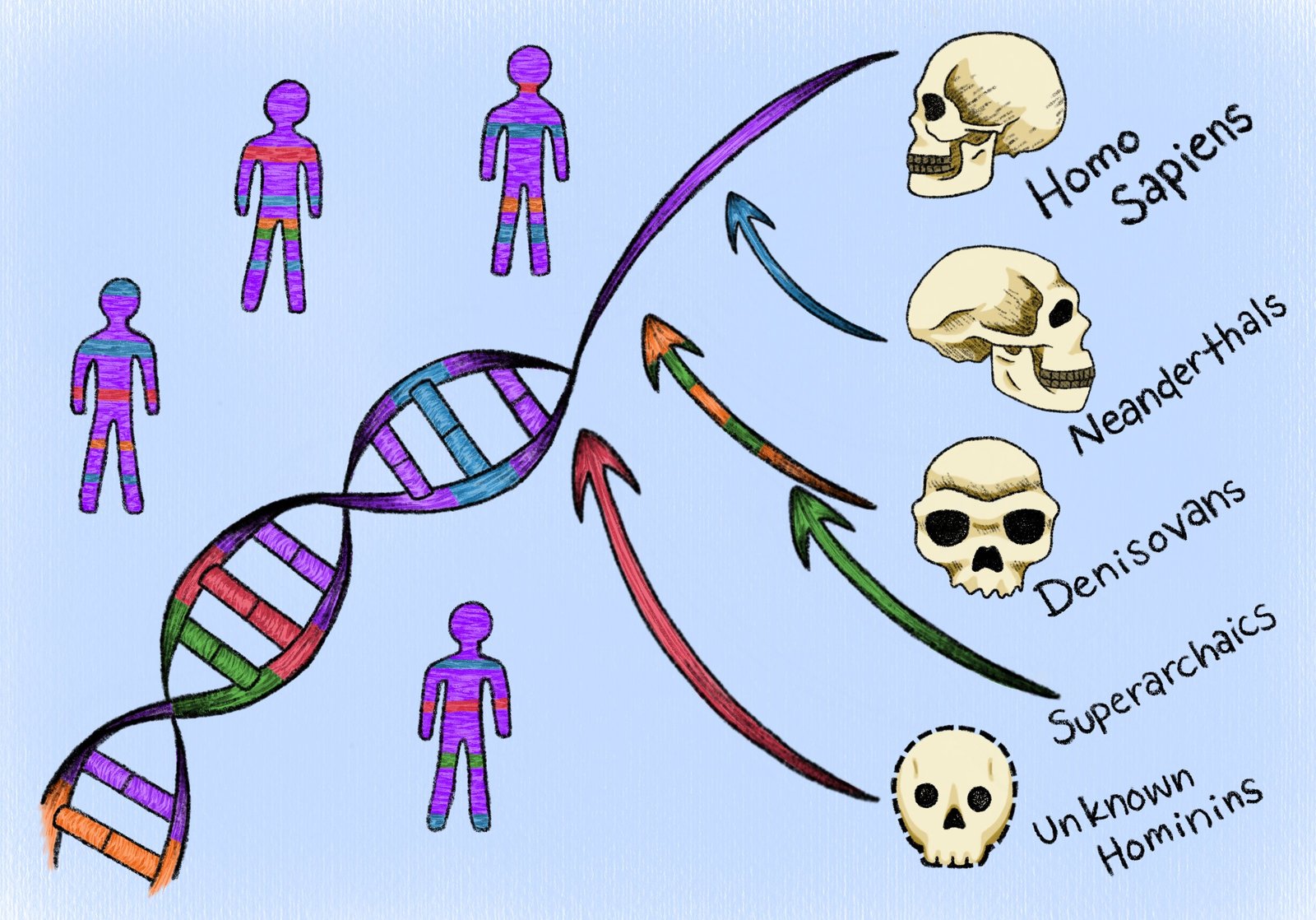
Anthropology asks how humans came to be who we are: our migrations, our mixtures, our adaptations, our stories. For most of its history the discipline read those questions through bones, artifacts, languages, and living traditions. Genomics offers an entirely new archive: the DNA carried by people alive today and by those who lived thousands of years ago.
I came to genomes from anthropology, not the other way around, and that order matters to me. A sequence alignment carries the residue of real lives, real movements, real encounters; it is not an abstraction on a screen. Reading it well requires the anthropologist's habit of asking whose story a dataset tells, and whose it leaves out.
The genome as an archive
Every genome is a palimpsest. Layers of ancestry are written over one another: deep splits between populations, later admixture, the signatures of bottlenecks and expansions. Where an archaeologist reads strata in the soil, a genomicist reads strata in haplotypes.
This is what pulled me toward bioinformatics. The questions I care about are anthropological, but the answers increasingly live in variant calls, reference panels, and statistical models. Learning to work fluently across both worlds, field and cluster, ethnography and pipeline, is the core of my doctoral work at Penn State.
Why write about it
Science that stays inside journals reaches very few people. This blog is my attempt to work in public: short essays on what I am reading, methods I am learning, and honest notes on what confuses me. If you are a student standing at the same intersection of fields, I hope these notes make the path a little less lonely.